

Introduction – Why Open water breathing feels so hard
Why does open water breathing feel so hard? This is a common question and struggle for many open water swimmers. Breathing during an open water swim can be difficult due to a combination of factors. Just one them is cold water shock, an involuntary response which causes hyperventilation, making it difficult to regulate your breathing pattern. This is made harder by increased fatigue from swimming with more resistance (currents) and a lack of rest spots. There are also other factors such as anxiety, which may cause you to panic, increasing your heart rate and rapid breathing, making it impossible to take in enough air.
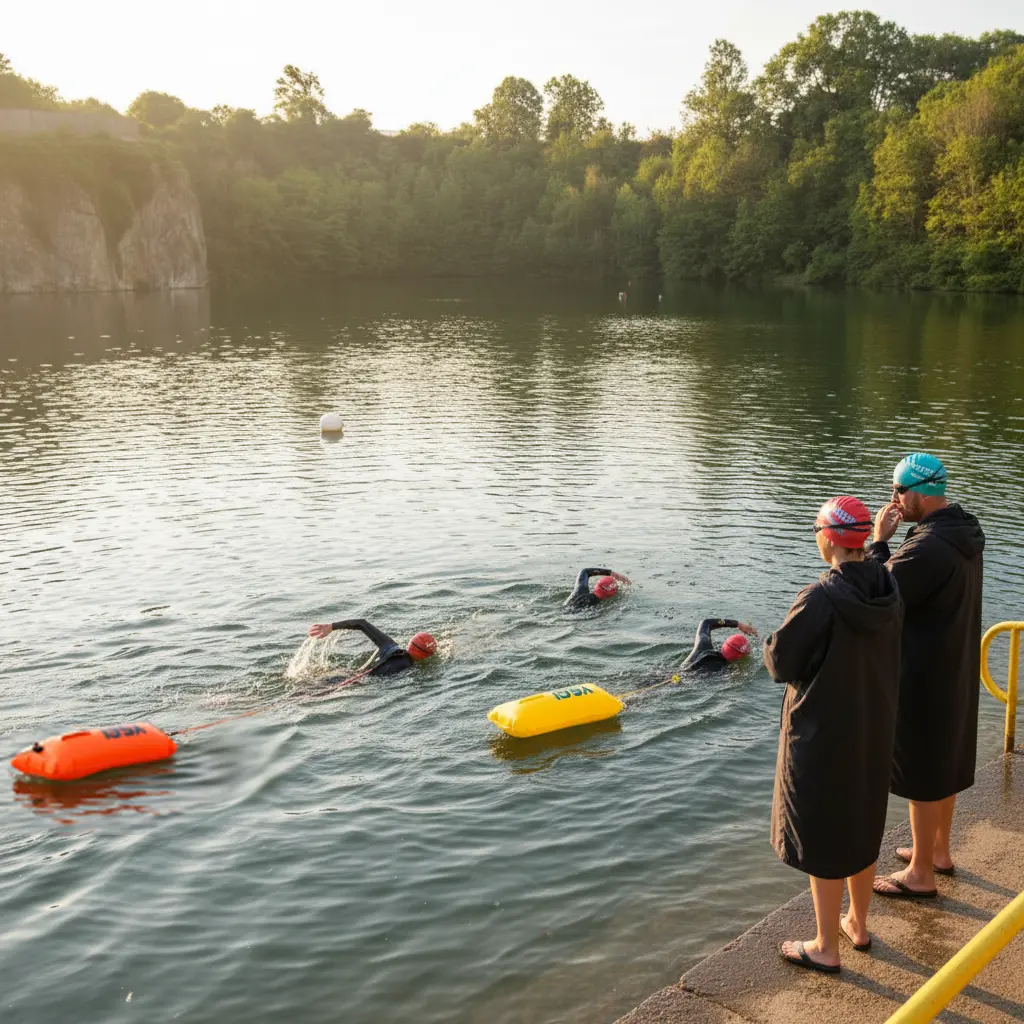
Why breathing in open water is different from the pool
There are huge differences between breathing during pool swims and open water. In terms of breathing, open water swimming is a whole new ballgame when compared to the pool. The pool is a far calmer and controlled environment compared to open water, which can be harsh and unpredictable due to strong currents, weather conditions and low water temperatures. This is also made harder because of the lack of rest spots, due to the water being open. Compared to pool swimming, where you’re able to take rests at the side of the pool when you need to. It is important to adjust our techniques to suit the conditions of our location.
Most common breathing mistakes
One of the most common breathing mistakes people make when open water swimming, is not exhaling properly and holding their breath underwater. By doing this, it causes a build-up of carbon dioxide (CO2), leading them to panic and breathe insufficiently. Another mistake many swimmers make is poor body alignment and lifting their head too high when trying to take in air. Although your head should be lifted higher than during pool swimming (due to the more rocky water) lifting your head too far forward or upward will cause your lower body to drop and drag, making it harder to swim and increasing your fatigue. A lack of breathing pattern also causes a lot of people to struggle when open water swimming. This makes it difficult to maintain a good rhythm, and waiting until you desperately need air before breathing often causes uncontrolled gasping and panic.
The importance of exhaling
Exhaling during your open water swim is critical to your breathing and overall performance. It has key benefits which will massively improve your breathing and make your swim more enjoyable. These include removing carbon dioxide (CO2), which allows you to feel less breathless and prevents panicking. This will also help you to maintain a steady rhythm and by exhaling slowly underwater, you will be able to find a stroke pattern that works for you. You will also have more time to take in a breath as you will have already exhaled most of your air.
Finding a rhythm
To help you maintain an efficient breathing pattern, it is important that you are able to find a rhythm that works for you. To do this, first try working on your bilateral breathing. This is where you alternate your breathing side, and is crucial to master for open water navigation purposes and building stroke symmetry. You can start off by practising your breathing for 3 to 5 strokes and alternating sides each time you take a breath. Timing is also a huge part of staying in rhythm. If you’re struggling with this try inhaling as your arm pulls back to your hip, and creates a natural gap for you to turn your head and take a breath. As we’ve already mentioned exhaling properly is crucial to your breathing pattern and it is also important for your rhythm. Ensure that you are exhaling steadily whilst your face is in the water, to give yourself time to inhale when you tilt your face up for air.
Techniques that actually work
Preperation is key
Before entering the water it is very useful to make a mental note of your route. Ensure that you have located where the buoys and prominent landmarks are located to help keep you on route during your swim. This will aid with your open water breathing as it means you will not need to lift your head to sight as often, which can lead to irregular breathing patterns and taking in gulps of water.
Sighting properly
If you’re struggling when sighting and it often throws your rythmn off, try a sighting and breathing combo drill. The aim is to sight and breathe in one fluid motion. Practice lifting your head up and forward slightly to spot your landmark and then turn your head to breath to one side and resume your stroke, all in one action. This will allow you to maintain your stroke rythmn whilst sighting and taking a breath. Aim to do this every 6-8 strokes. Ensure you practice this technique in the pool first, to master it before you try it out in the open water.
Bi-lateral breathing
As mentioned practicing your breathing on both sides is key to maintaining a pattern and rythmn when open water swimming. This will help you to balance your stroke and make sure your’re ready for the unforeseen elements open water swimming might throw at you, such as waves or glare on either side.
Stick to it
Practicing your techniques is the best way to master them. As you continue to consistently swim in cold open water your body will begin to adjust to the conditions. This is because as your body acclimatises your breathing will also become easier to control.
As a last note on techniques, remember the importance of exhaling in water!
Breathing before you enter the water
Before entering cold water, to prepare for the shock and the affects it can have on your breathing, it is important to calm your body first. You can achieve this by trying what is known as a ‘whisky breath.’ To do this take four deep breaths in through your nose and down to your belly; trying not to let your chest rise by sending the breath to your abdomen. Then exhale this breath out slowly for 8 counts, again through your nose if you are able to or through your mouth if it is more comfortable. Allow your body to relax during these exhales and try to focus your mind on your breathing and counts. Aim to do around 6-10 sets of these before you enter the water.
Final takeaway
There are lot’s of useful steps you can take to help you breathe when open water swimming. Make sure to remember the key ones, exhaling, rythmn and most importantly practice. Try out these techniques and see what works for you!
Bibliography
Diver’s Cove (2024) How to breathe properly when outdoor swimming. Available from https://www.diverscove.co.uk/blog/how-to-breathe-properly-when-outdoor-swimming [accessed 20 January 2026]
Efficient Endurance (2024) The 5 main differences between pool and open water technique. Available from https://efficient-endurace.com/blog/the-differences-between-pool-and-open-water-technique/ [accessed 20 January 2026]
Outdoor Swimmer (2018) Tips and tricks for bilateral breathing. Available from https://outdoorswimmer.com/coach/how-tos/tips-and-tricks-for-bilateral-breathing/ [accessed 20 January 2026]
Swimming.org (2026) How to practice open water sighting. Available from https://www.swimming.org/openwater/practice-ope-water-sighting/ [accessed 20 January 2026]
Swimwell (2019) Why breathing out is more important than breathing in when swimming. Available from https://www.swimwell.com.au/single-post/2019/08/03/why-breathing-out-is-more-important-than-breathing-in-when-swimming [accessed 20 January 2026]